
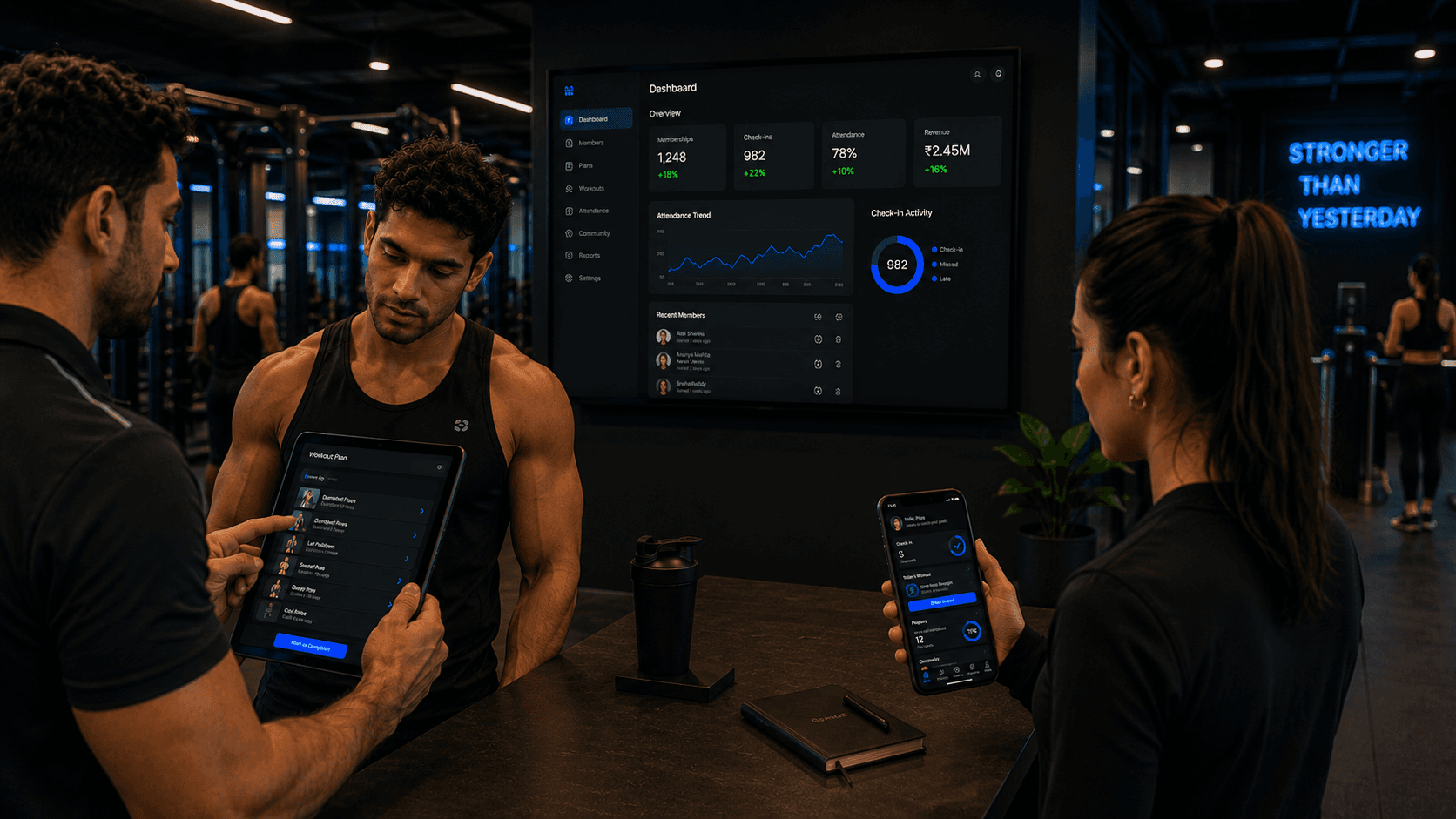
A member's decision to cancel is rarely made at the gym. It happens at home, in the evening, when they are thinking about whether they are getting enough value from their membership. The problem is that most gyms only have touchpoints with members during their physical visits — which might be three or four hours a week.
A hybrid gym model extends the gym's presence into the other 164 hours of the week. Not through surveillance, but through tools that make the gym feel useful, present, and personal even when the member is not there.
What a hybrid model actually means
Hybrid does not mean live-streaming your group classes or selling on-demand workout videos (though it can include those). At its core, it means giving members a digital experience that is connected to their physical training.
- Workout plans they can follow on their phone, whether they are at your gym or travelling.
- A log of every training session — weights, reps, progress — that they can reference and build on.
- A meal plan that aligns with their fitness goal and is updated by their trainer as they progress.
- The ability to check in digitally, view their attendance history, and see their membership status without calling the front desk.
- A community feed that connects them to other gym members between sessions.
Why digital touchpoints reduce churn
The decision to cancel a gym membership is almost always a value-perception problem, not a financial one. Members cancel when they feel like they are paying for something they do not use enough. A digital layer changes this dynamic.
- A member who logged their workout, checked their meal plan, and scrolled the community feed on Tuesday is still "using" the gym — even if they did not visit physically that day.
- Progress visibility is one of the strongest retention signals. Members who can see measurable progress are far less likely to cancel.
- Community connection creates social stakes. Cancelling a gym that has your friends in it costs you more than just the membership.
Digital plans: the trainer's leverage multiplier
A trainer who gives a member a printed workout sheet sees them three times a week. A trainer who assigns a digital plan can guide fifty members simultaneously, with each member following a personalised programme between sessions.
- Digital plans reduce the repetitive explanation time trainers spend in each session. The plan is already on the member's phone.
- Trainers can update plans remotely — adding an exercise, adjusting weight targets, or changing rest periods — without waiting for the next session.
- Members who follow a structured plan are more likely to show up consistently. The plan gives them a reason to be in the gym on a specific day.
QR check-in: turning attendance into data
A QR check-in system is more than a replacement for a sign-in sheet. It turns every visit into a data point that your gym can act on.
- You can see which members have not visited in two weeks — and trigger a personal follow-up before they formally disengage.
- You can identify your most frequent visitors and reward them.
- You can analyse peak hours and manage capacity more effectively.
- Members can view their own attendance history, which reinforces consistency as a visible goal.
Building community beyond the gym floor
Physical gyms have a community advantage over digital fitness platforms — but most do not capitalise on it. Members interact on the gym floor, but that interaction is ephemeral. A digital community extends and documents it.
- A progress feed where members share milestones and photos creates ongoing social proof visible to the whole gym.
- Leaderboards — especially across exercises that everyone does, like squats or deadlifts — create friendly competition that persists between sessions.
- The follow/follower dynamic lets members build their own training social network within your gym.
The gyms that retain members best are the ones that are part of their members' daily routine — not just their training schedule.
A hybrid model does not require new hardware, a separate app, or a significant upfront investment. It requires a platform that connects the physical and digital sides of the gym experience into one coherent system. When you build that, the gym stops being a place members go — and starts being something they carry with them.