
Running a gym is a local business. Most of your members live or work within five kilometers of your door. That changes how you should think about marketing — you do not need a national campaign, you need a local one that is sharp, consistent, and easy to sustain.
1. Get your Google Business Profile right first
Before spending anything on ads, make sure your Google Business Profile is complete and accurate. This is the listing that appears when someone searches "gym near me" or "fitness center in [your area]." It is free and it directly affects whether you show up in local search results.
- Add every service you offer — gym membership, personal training, group classes, nutrition coaching.
- Upload ten to fifteen recent photos, including your equipment, space, and any classes in action.
- Keep your hours accurate. Incorrect hours are a fast way to lose a walk-in.
- Respond to every review — positive and negative. A gym that responds looks professional and trustworthy.
Quick win
Ask your most satisfied long-term members to leave a review this week. A short personal message asking for honest feedback converts far better than a generic email blast.
2. Build a referral program with real teeth
Word of mouth is the most cost-effective marketing channel for gyms — but most gyms leave it entirely to chance. A structured referral program turns happy members into active advocates.
- Offer a meaningful incentive. One free month, a discount on renewal, or a personal training session works. A water bottle does not.
- Make the referral action simple. Give members a link or a card they can share.
- Track every referral. Know which members are sending you business so you can acknowledge them.
- Follow up on every referral lead within 24 hours — speed matters at this stage.
3. Use trial passes strategically
A free trial removes the biggest barrier to joining — uncertainty. But the design of your trial matters as much as offering one.
- Seven-day trials convert better than single-day passes. People need enough time to form a habit.
- Pair every trial with a check-in from a staff member or trainer on day three. One personal touchpoint dramatically improves conversion.
- Follow up within 48 hours of trial expiry with a clear, non-pressurised offer to join.
4. Build social proof beyond star ratings
People trust other people. Testimonials, before-and-after stories, and member highlights on social media give prospective members something to connect with emotionally — not just a price and a list of equipment.
- Feature a member spotlight once a week across your social channels. Ask for their permission first and let them tell their own story.
- Post workout highlights from class sessions — these show energy, community, and results simultaneously.
- Respond to comments publicly. Engagement signals activity and builds perception of community.
5. Build a follow-up system for every lead
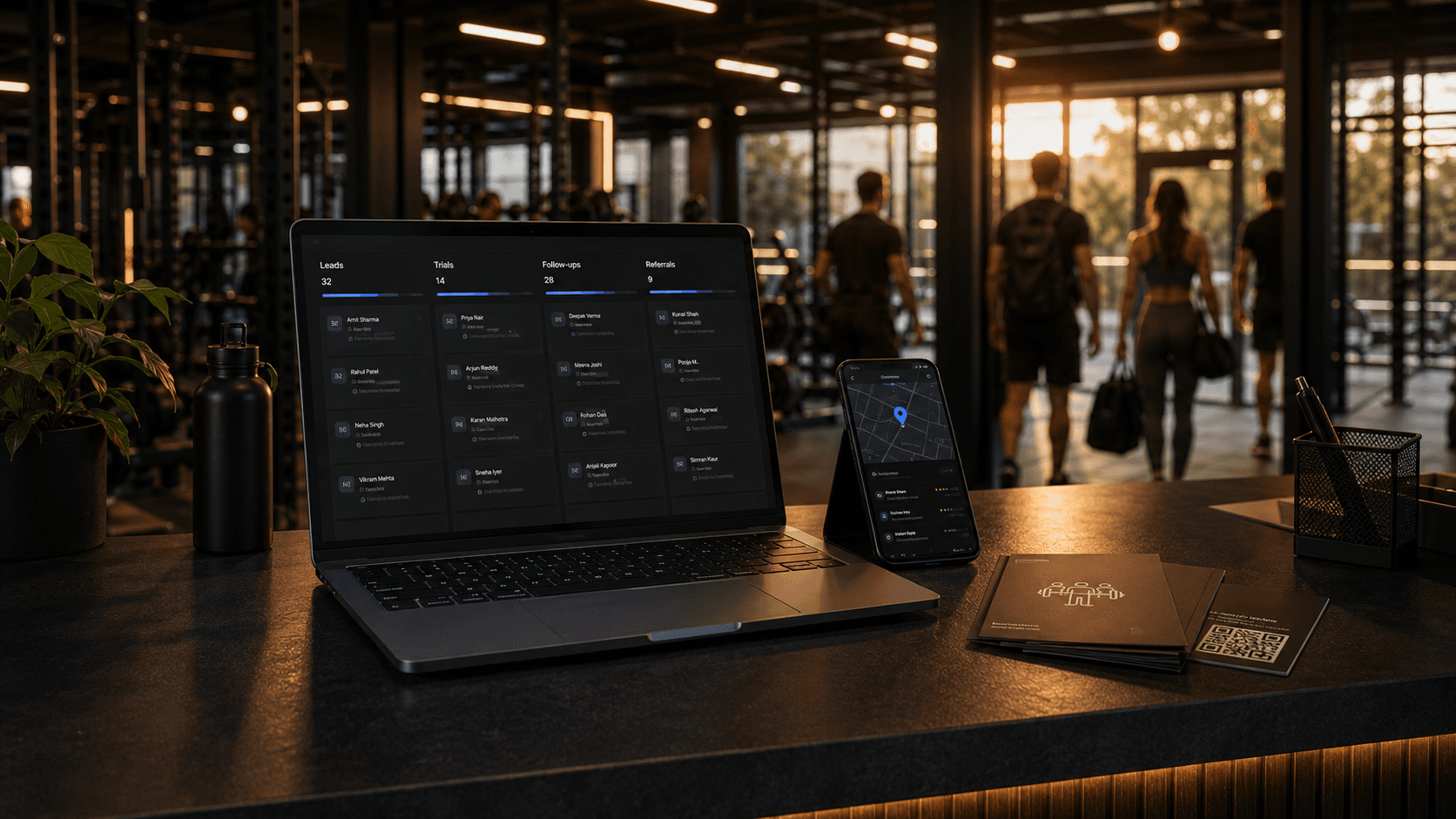
Most gym enquiries — walk-ins, Instagram DMs, website form fills — never convert because nobody follows up a second time. A simple CRM process can double your conversion rate without spending anything extra on acquisition.
- Log every lead in one place — not a group chat, not a spreadsheet that only one person checks.
- Set a follow-up task for each lead within 24 hours of enquiry.
- After the first follow-up, space them out: day 3, day 7, day 14. Most conversions happen on the third or fourth touchpoint.
- If a lead goes cold after 30 days, send one final check-in and archive them if there is no response.
6. Retention is your cheapest acquisition channel
The easiest way to grow a gym is to keep the members you already have. Renewal rates compound. A gym with 90% renewal needs to replace 10% of its base each year. A gym with 60% renewal needs to replace 40% — which costs five times more in marketing and time.
- Contact every expiring member before their membership lapses — not after. A proactive message converts far better than a win-back.
- Track attendance patterns. Members who stop coming are at high risk of cancelling. A personal check-in from a trainer or admin can change the outcome.
- Make renewal frictionless. Members should be able to renew in seconds, not fill out another form.
The gym industry average for member retention sits between 70% and 80%. Gyms that invest in systematic follow-up, clear communication, and a strong member experience consistently outperform that average.
None of these strategies require a large budget. They require consistency, a clear process, and someone accountable for each step. That is what separates gyms that grow from gyms that stay flat.